14-Day Returns* · 2-Year Warranty · Worldwide Shipping, US Included
14-Day Returns*
2-Year Warranty
Worldwide Shipping, US Included
The brand name "Xerox" remains one of the most famous in the world, a genericized trademark like "Kleenex" or "Google." But the company is now a mid-tier technology services and printing firm, a resilient survivor rather than a world-beater. It serves as a powerful, cautionary ghost at the feast of every successful technology company: Are you building the future, or are you building a better buggy whip for the present?
However, this pivot left the original hardware business weakened. The rise of the "paperless office" – ironically enabled by the scanning and digital workflow technologies Xerox had helped create – steadily eroded the demand for printing and copying. xerox wikipédia
Xerox had invented the digital future and then failed to own it. It is the ultimate case study in – a market leader so wedded to its existing customers and profit model that it cannot see (or act on) the disruptive technology it has created. III. Decline, Restructuring, and the Japanese Onslaught (1980s–1990s) While Xerox played in the high-end, slow-to-market workstation space, its core copier business was attacked from below. Japanese companies, led by Canon , exploited a loophole. Xerox’s patents expired in the late 1970s. Canon introduced a radically different business model: the personal or desktop copier (e.g., Canon NP-200). Instead of leasing large, complex machines that required service technicians, Canon sold small, cheap, reliable copiers using a replaceable cartridge system (the "all-in-one" toner, drum, and developer unit). This shifted maintenance from a trained technician to the user. The brand name "Xerox" remains one of the
Haloid spent years refining Carlson’s invention. The key challenge was finding a better light-sensitive material; the solution was , which could hold an electrostatic charge and dissipate it when exposed to light. To brand this new process, Haloid coined the term "xerography" – from the Greek words xeros (dry) and graphein (writing). In 1949, they launched the first crude xerographic copier, Model A , but it was manual and messy. The rise of the "paperless office" – ironically
The response was a multi-billion dollar loan, asset sales (selling off its stake in Fuji Xerox, which was painful), and a massive layoff of 20,000 employees. But the darkest chapter was the . To hide operational problems and meet Wall Street expectations, Xerox executives had manipulated its leasing revenue accounting. In 2002, the SEC charged Xerox with fraudulently accelerating the recognition of equipment revenue by over $3 billion and inflating pre-tax earnings by $1.5 billion. The company paid a $10 million fine, restated five years of financial results, and its auditor, KPMG, was also sanctioned. The scandal was a humiliation. V. The Modern Era: Services, Fujifilm, and the End of an Era (2002–2024) Under Anne Mulcahy (CEO 2001-2009, the first woman to lead Xerox), the company physically and financially stabilized. She is widely credited with saving Xerox from bankruptcy. Her successor, Ursula Burns (CEO 2009-2016), was the first Black woman to lead a Fortune 500 company. Burns pivoted the company aggressively away from hardware and toward business services.
Xerox is the quintessential tale of . It is a parable of how success can breed myopia. The company invented the PC, the GUI, Ethernet, and the laser printer – the building blocks of the 21st-century office – and gave them away for free because they didn’t fit its existing business model of selling copies per page. It is a permanent case study in business schools about the "innovator’s dilemma": The very management practices that make a company dominant in its market make it nearly incapable of responding to disruptive change.
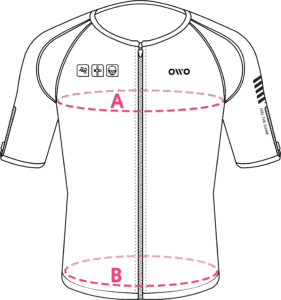
Measure your chest (A) and hips (B) following our indications.
The reference measurement will always be the larger of the two (A or B).
Look in the chart to which size corresponds to that measurement.
| Size | Reference measurements | |
|---|---|---|
| Inches | Centimeters | |
| 2XS | 25.6 – 29.4 | 65 – 74 |
| XS | 29.5 – 32.6 | 75 – 82 |
| S | 32.7 – 36.1 | 83 – 91 |
| M | 36.2 – 39.7 | 92 – 100 |
| L | 39.8 – 42.8 | 101 – 108 |
| XL | 42.9 – 46.3 | 109 – 117 |
| 2XL | 46.4 – 49.9 | 118 – 126 |
| 3XL | 50 – 53 | 127 – 134 |
| 4XL | 53.1 – 55.9 | 135 – 142 |