What Is Dts Sound Unbound May 2026

DTS Sound Unbound solves this through . It is a Windows Store application that unlocks the DTS:X decoder for PCs. It takes multi-channel or object-based audio tracks (specifically DTS:X encoded content) and mathematically calculates how those sounds should hit the human ear to mimic real life. 3. Core Technology: Object-Based vs. Channel-Based Audio To understand DTS Sound Unbound, one must differentiate between traditional audio and object-based audio:

DTS Sound Unbound acts as the for DTS:X. When a game (like Metro Exodus or Gears 5 ) sends a sound signal, it sends metadata saying: "This explosion happens at X:5, Y:2, Z:10." Sound Unbound takes that coordinate and uses a Head-Related Transfer Function (HRTF) to simulate how that sound would enter the left and right ears differently based on the angle of your head. 4. Key Features and Functionality When a user installs DTS Sound Unbound, they gain access to three primary functions: A. DTS:X for Headphones This is the flagship feature. It virtualizes up to 11.1 channels of surround sound into two headphone channels. The result is precise positional audio (verticality). Users can close their eyes and point to where a sound originated. B. Customizable Equalization (EQ) The software includes spatial audio presets tailored for specific hardware (e.g., SteelSeries, Razer) or specific genres (e.g., "RPG Mode" for ambient exploration vs. "FPS Mode" for sharpened footsteps). C. System-Wide Integration Because it integrates into the Windows Sonic framework (Windows 10/11 spatial audio API), it works across all applications, not just games. It upmixes standard stereo music (Spotify/YouTube) and legacy 5.1 movies into a spatial experience. 5. Use Cases and Applications Gaming (Primary Use Case): Competitive gamers benefit from "sound whoring"—hearing an enemy's precise location before seeing them. Single-player gamers benefit from immersion, hearing rain on a metal roof above them or whispers from behind.

If a user has a DTS:X encoded Blu-ray or streaming file (e.g., via the Movies & TV app), Sound Unbound decodes the height channels, allowing the user to hear a plane fly over their head using only $50 headphones. what is dts sound unbound

| Feature | Traditional (e.g., 5.1/7.1) | DTS:X (Object-Based) | | :--- | :--- | :--- | | | Sounds mixed to specific speakers (Left, Right, Rear). | Sounds assigned to coordinates in 3D space (X,Y,Z). | | Scalability | Fixed; sounds pan between fixed points. | Dynamic; the decoder renders sound for any speaker or headphone setup. | | Height | Requires physical ceiling speakers for vertical sound. | Virtualized via HRTF; no physical speakers needed. |

[Your Name] Date: [Current Date] Course/Subject: Audio Technology / Computer Science / Digital Media 1. Abstract In the modern era of digital entertainment, sound design has evolved from simple stereo playback to complex three-dimensional audio landscapes. DTS Sound Unbound is a software application and audio processing technology developed by Xperi (the parent company of DTS). This paper explores what DTS Sound Unbound is, how it functions as a bridge between standard PC audio hardware and high-end spatial audio, and why it represents a significant shift in how users experience sound in gaming, movies, and music. Unlike traditional surround sound that requires a physical speaker array, DTS Sound Unbound uses advanced object-based audio rendering via the DTS:X codec to create an immersive "sound bubble" around the listener using standard headphones. 2. Introduction For decades, surround sound required a physical setup: five speakers, a subwoofer, and a receiver. However, the majority of modern PC gamers and media consumers use stereo headphones. This creates a problem: how do you accurately represent a helicopter flying overhead or footsteps coming from behind using only two drivers placed next to the ears? DTS Sound Unbound solves this through

Dolby Atmos is better for "cinematic bass," while DTS Sound Unbound is widely considered superior for "directional clarity" and vertical height perception due to its less compressed dynamic range. 8. Conclusion DTS Sound Unbound is not merely an "app"; it is a software-based audio processor that democratizes high-end spatial audio. By leveraging the physics of HRTF and the efficiency of object-based metadata, it allows a $20 pair of earbuds to simulate a $2,000 11.1.4 physical speaker system.

| Technology | Approach | Best For | Price | | :--- | :--- | :--- | :--- | | | Spatial (Object-based) with neutral tuning | Movies & Single-player games | ~$20 | | Dolby Atmos for Headphones | Spatial (Object-based) with aggressive tuning | Competitive gaming & Atmos mixes | ~$15 | | Windows Sonic | Basic HRTF virtualization | General YouTube/Netflix | Free | | THX Spatial Audio | 7.1 Virtualization | Competitive FPS (R6, Valorant) | $30+ | When a game (like Metro Exodus or Gears

DTS Sound Unbound: Bridging the Gap Between Gaming and Spatial Audio

How to Translate from Arabic to Tamil


If you're having trouble translating your text from one language to another using translationly, then you can follow these steps to translate your text perfectly.

To translate your text, first of all, you've to choose the "Arabic as input language" and "Tamil as output language" in translationly. You can also check our supported languages for translation here.

what is dts sound unbound

Once you've chosen the "input" and "output" language, enter your text to be translated in the first box, or the input box (We recommend the text you want to translate must be the plain text for better translation).

what is dts sound unbound

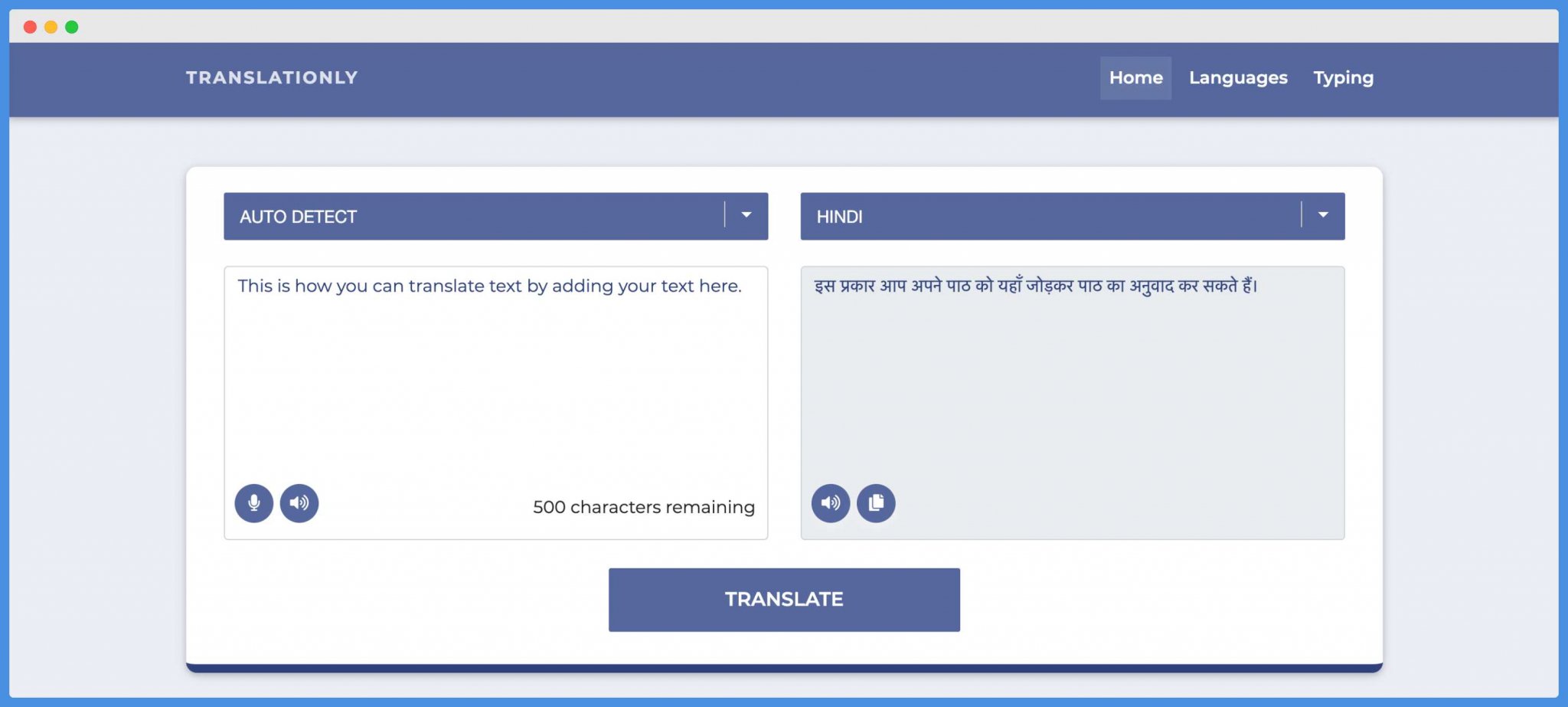
Once you have entered the text which is to be translated in the input box, click on the "Translate" button, and you'll get the output of translated text in your preferred language.

what is dts sound unbound

Not enough?

Use our App

The App is free and easy to use with all the functionality of Translationly.

100+ languages to choose from

Our impressive flexibility of multilingual language translation is what make it more impressive.

Talk to write

Save your time and hassle to write. Just speak and our AI will write for you.

Fully Responsive

A website designed to be used on any kind of platform available. No worries for browser compatibility.

100+ Typing Languages

Not only we translate to different language. We also provide you with the facility to write your native vocabulary in any language and convert it to yours native.

API Available

Want to use tranlationly to translate content of your website or to traslate your blog post as you write? Use our API.

One for All

One API for all the features to use on your website.

Easy to use & customize

Our API Feature is much easy to use and highly customization as per your need.

DTS Sound Unbound solves this through . It is a Windows Store application that unlocks the DTS:X decoder for PCs. It takes multi-channel or object-based audio tracks (specifically DTS:X encoded content) and mathematically calculates how those sounds should hit the human ear to mimic real life. 3. Core Technology: Object-Based vs. Channel-Based Audio To understand DTS Sound Unbound, one must differentiate between traditional audio and object-based audio:

DTS Sound Unbound acts as the for DTS:X. When a game (like Metro Exodus or Gears 5 ) sends a sound signal, it sends metadata saying: "This explosion happens at X:5, Y:2, Z:10." Sound Unbound takes that coordinate and uses a Head-Related Transfer Function (HRTF) to simulate how that sound would enter the left and right ears differently based on the angle of your head. 4. Key Features and Functionality When a user installs DTS Sound Unbound, they gain access to three primary functions: A. DTS:X for Headphones This is the flagship feature. It virtualizes up to 11.1 channels of surround sound into two headphone channels. The result is precise positional audio (verticality). Users can close their eyes and point to where a sound originated. B. Customizable Equalization (EQ) The software includes spatial audio presets tailored for specific hardware (e.g., SteelSeries, Razer) or specific genres (e.g., "RPG Mode" for ambient exploration vs. "FPS Mode" for sharpened footsteps). C. System-Wide Integration Because it integrates into the Windows Sonic framework (Windows 10/11 spatial audio API), it works across all applications, not just games. It upmixes standard stereo music (Spotify/YouTube) and legacy 5.1 movies into a spatial experience. 5. Use Cases and Applications Gaming (Primary Use Case): Competitive gamers benefit from "sound whoring"—hearing an enemy's precise location before seeing them. Single-player gamers benefit from immersion, hearing rain on a metal roof above them or whispers from behind.

If a user has a DTS:X encoded Blu-ray or streaming file (e.g., via the Movies & TV app), Sound Unbound decodes the height channels, allowing the user to hear a plane fly over their head using only $50 headphones.

| Feature | Traditional (e.g., 5.1/7.1) | DTS:X (Object-Based) | | :--- | :--- | :--- | | | Sounds mixed to specific speakers (Left, Right, Rear). | Sounds assigned to coordinates in 3D space (X,Y,Z). | | Scalability | Fixed; sounds pan between fixed points. | Dynamic; the decoder renders sound for any speaker or headphone setup. | | Height | Requires physical ceiling speakers for vertical sound. | Virtualized via HRTF; no physical speakers needed. |

[Your Name] Date: [Current Date] Course/Subject: Audio Technology / Computer Science / Digital Media 1. Abstract In the modern era of digital entertainment, sound design has evolved from simple stereo playback to complex three-dimensional audio landscapes. DTS Sound Unbound is a software application and audio processing technology developed by Xperi (the parent company of DTS). This paper explores what DTS Sound Unbound is, how it functions as a bridge between standard PC audio hardware and high-end spatial audio, and why it represents a significant shift in how users experience sound in gaming, movies, and music. Unlike traditional surround sound that requires a physical speaker array, DTS Sound Unbound uses advanced object-based audio rendering via the DTS:X codec to create an immersive "sound bubble" around the listener using standard headphones. 2. Introduction For decades, surround sound required a physical setup: five speakers, a subwoofer, and a receiver. However, the majority of modern PC gamers and media consumers use stereo headphones. This creates a problem: how do you accurately represent a helicopter flying overhead or footsteps coming from behind using only two drivers placed next to the ears?

Dolby Atmos is better for "cinematic bass," while DTS Sound Unbound is widely considered superior for "directional clarity" and vertical height perception due to its less compressed dynamic range. 8. Conclusion DTS Sound Unbound is not merely an "app"; it is a software-based audio processor that democratizes high-end spatial audio. By leveraging the physics of HRTF and the efficiency of object-based metadata, it allows a $20 pair of earbuds to simulate a $2,000 11.1.4 physical speaker system.

| Technology | Approach | Best For | Price | | :--- | :--- | :--- | :--- | | | Spatial (Object-based) with neutral tuning | Movies & Single-player games | ~$20 | | Dolby Atmos for Headphones | Spatial (Object-based) with aggressive tuning | Competitive gaming & Atmos mixes | ~$15 | | Windows Sonic | Basic HRTF virtualization | General YouTube/Netflix | Free | | THX Spatial Audio | 7.1 Virtualization | Competitive FPS (R6, Valorant) | $30+ |

DTS Sound Unbound: Bridging the Gap Between Gaming and Spatial Audio
what is dts sound unbound