kubectl config use-context <context-name> | Command | Purpose | |---------|---------| | kubectl config get-contexts | List all available contexts | | kubectl config current-context | Show the current context | | kubectl config use-context <name> | Set the current context | | kubectl config set-context <name> | Create or modify a context (does not switch to it) | Example Workflow # List all contexts kubectl config get-contexts See current context kubectl config current-context Switch to a different context kubectl config use-context prod-cluster Verify the change kubectl config current-context Note on kubectl config set-context While set-context modifies or creates a context, it does not switch to it. You must follow with use-context to make it active:
There is no direct kubectl set current context command. To change or set the current context, you use:
kubectl config set-context my-context --namespace=my-ns kubectl config use-context my-context
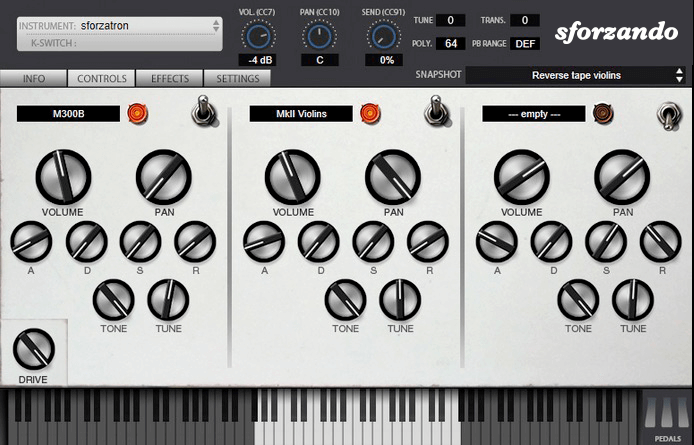
The SFZ Format is widely accepted as the open standard to define the behavior of a musical instrument from a bare set of sound recordings. Being a royalty-free format, any developer can create, use and distribute SFZ files and players for either free or commercial purposes. So when looking for flexibility and portability, SFZ is the obvious choice. That’s why it’s the default instrument file format used in the ARIA Engine.
OEM developers and sample providers are offering a range of commercial and free sound banks dedicated to sforzando. Go check them out! And watch that space often, there’s always more to come! You are a developer and want to make a product for sforzando? Contact us!
You can also drop SF2, DLS and acidized WAV files directly on the interface, and they will automatically get converted to SFZ 2.0, which you can then edit and tweak to your liking!
Download for freeInstrument BanksSupport
kubectl config use-context <context-name> | Command | Purpose | |---------|---------| | kubectl config get-contexts | List all available contexts | | kubectl config current-context | Show the current context | | kubectl config use-context <name> | Set the current context | | kubectl config set-context <name> | Create or modify a context (does not switch to it) | Example Workflow # List all contexts kubectl config get-contexts See current context kubectl config current-context Switch to a different context kubectl config use-context prod-cluster Verify the change kubectl config current-context Note on kubectl config set-context While set-context modifies or creates a context, it does not switch to it. You must follow with use-context to make it active:
There is no direct kubectl set current context command. To change or set the current context, you use: kubectl set current context
kubectl config set-context my-context --namespace=my-ns kubectl config use-context my-context kubectl config use-context <