
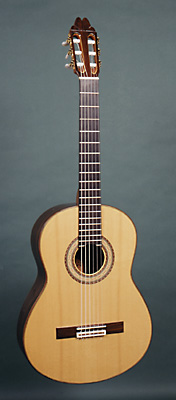
Welcome to the fantastic world of classical guitar. In this site, you will find classical guitar pieces, in midi format, for one and more guitars: actually 5641 MIDI files from 96 composers. Information on how to create midi files and a tutorial on the tablature notation system is presented. Images of ancient guitars provided.
|
|
Perhaps the cruelest irony of elite pain is its illegitimacy in the public eye. When a working-class person complains of stress, they receive sympathy; when a billionaire complains, they receive a meme. This cultural invalidation creates a secondary wound: shame. The elite sufferer knows they have a beach house, a private jet, or a trophy. They know they should be grateful. And that very knowledge—the meta-awareness of their privilege—often prevents them from seeking help. They become trapped in a cycle of self-censorship, where admitting pain feels like an insult to the less fortunate. This is the “golden cage” syndrome: the bars are invisible, but the confinement is real. The result is a silent epidemic of elite depression, treated not with therapy but with overwork, infidelity, or reckless philanthropy—attempts to earn the right to feel.
If poverty is the lack of choice, elite pain is the paralysis of excess. The philosopher Søren Kierkegaard described anxiety as “the dizziness of freedom.” For the elite, every decision—from which school to send a child to, which medical treatment to pursue, which philanthropic cause to champion—carries the weight of infinite alternatives. This “tyranny of optionality” breeds a specific form of regret: the fear that one is always failing to optimize. The middle-class parent who sends their child to the local public school has made a constrained peace with reality. The elite parent, facing a menu of private tutors, international boarding schools, and legacy admissions, experiences a chronic low-grade grief for the path not taken. Elite pain, therefore, is the agony of never feeling that enough is enough. elite pain
To critique elite pain is not to equate it with the suffering of starvation, chronic illness, or systemic oppression. A broken bone is worse than a bruised ego; malnutrition outweighs malaise. However, to rank suffering is to miss the point. Pain is not a zero-sum resource. The existence of elite pain does not diminish the reality of poverty; rather, it reveals a universal truth: status is an anesthetic for the body, not the soul. The CEO’s panic attack and the janitor’s backache are different in kind, not just degree. One arises from scarcity, the other from surfeit. But both testify to the human condition’s irreducible capacity for suffering. To dismiss “elite pain” as a fiction is to embrace a dangerous lie—that money buys immunity from despair. It does not. It merely changes the price of the ticket. Perhaps the cruelest irony of elite pain is
Introduction In an era defined by the democratization of grievance, the concept of “elite pain” seems oxymoronic. Pain is typically viewed as the great equalizer—a biological and emotional alarm that disregards tax brackets and social standing. Yet, to dismiss the suffering of the powerful as merely “rich people problems” is to ignore a more complex psychological and sociological phenomenon. “Elite pain” refers to the specific, often invisible forms of distress experienced by those at the apex of wealth, status, or talent: the burnout of the CEO, the existential dread of the celebrity, the performance anxiety of the prodigy. This essay argues that elite pain is not the absence of suffering but a unique luxury affliction —characterized by high-stakes isolation, the tyranny of choice, and a profound crisis of meaning—which society is both ill-equipped to pity and dangerously quick to invalidate. The elite sufferer knows they have a beach
The most defining feature of elite pain is loneliness. For the average person, community is built on mutual vulnerability: sharing fears about bills, job security, or health. For the elite, vulnerability is a liability. A hedge fund manager cannot admit to depression without spooking investors; a politician cannot confess to self-doubt without appearing weak. This creates what psychoanalysts call the “tower paradox”: the higher you climb, the fewer people are left to hear you scream. Studies on high-net-worth individuals reveal that rates of suicide and substance abuse often exceed national averages, not despite their resources, but because those resources buy physical comfort while erecting social barriers. The elite do not suffer from a lack of bandaids; they suffer from a lack of witnesses.
Composers are grouped in 6 pages: A-B;
C-F;
G-L;
M-O;
P-R; S-Z .
J.-S.
Bach , A.
Barrios Mangore , N. Coste
, M. Giuliani , F.
Sor and F.
Tarrega are on their own page
Click here
to listen to 20 great MIDI from the site
Composers in alphabetical order
Note to MIDI sequence contributors
Your submissions are welcomed.
Please send them by e-mail (end of text). Pieces
should bear the composer's name and be properly identified.(ex.: J.K. Mertz (1806-1856) Nocturne
Op.4 No.2.). The submissions
should bear information on the transcriber or arranger when available. The submitter's name
will appear beside the accepted submission.
This site exists primarily to showcase pieces written for the classical
guitar. Established and recognized transcriptions and arrangements (e.g.,
Tarrega, Segovia,..) of pieces written by non-guitar composers will also be given
high priority.
New compositions for the classical guitar are also welcomed. New
compositions that meet quality guidelines will be added to the site. For
new contributors, it would be appreciated if you would also submit several
pieces by known composers in addition to your own compositions. This will
help to expand the repertoire of established works for the classical guitar in
addition to expanding the repertoire of new music.
Last update: March 8 2026
Copyright François Faucher 1998-2025
 G.F.Handel's Sonata 2. Allegro
3.Adagio HWV368
G.F.Handel's Sonata 2. Allegro
3.Adagio HWV368